Arista sold the 7050 switches in three generations, the 7050X, the 7050X2 and the 7050X3, and in each the letters after 7050 name the kind of port. This guide walks through the SFP+ models (7050SX), the 40GbE QSFP+ models (7050QX) and the copper models (7050TX), so a buyer can tell a DCS-7050SX-64 from a DCS-7050SX3-48YC8 at a glance. Every figure comes from Arista's data sheets and end of sale notice, listed under Sources.
The short answer
Decide the port first. An SFP+ rack of 10GbE servers wants a 7050SX; a layer of 40GbE links wants a 7050QX; a rack wired with copper 10GBASE-T wants a 7050TX. Then choose the generation: the original 7050X models are the simplest, the 7050X2 models add memory and buffer, and the 7050X3 models move to 25GbE and 100GbE ports with a 32 MB buffer. Every model comes as an F unit, moving air front to rear, or an R unit, moving it rear to front.
The models side by side
| Model | Generation | Ports | Switching capacity | Latency |
|---|---|---|---|---|
| DCS-7050SX-64 | 7050X | 48 x SFP+, 4 x QSFP+ | 1.28 Tbps, 960 Mpps | 550 ns |
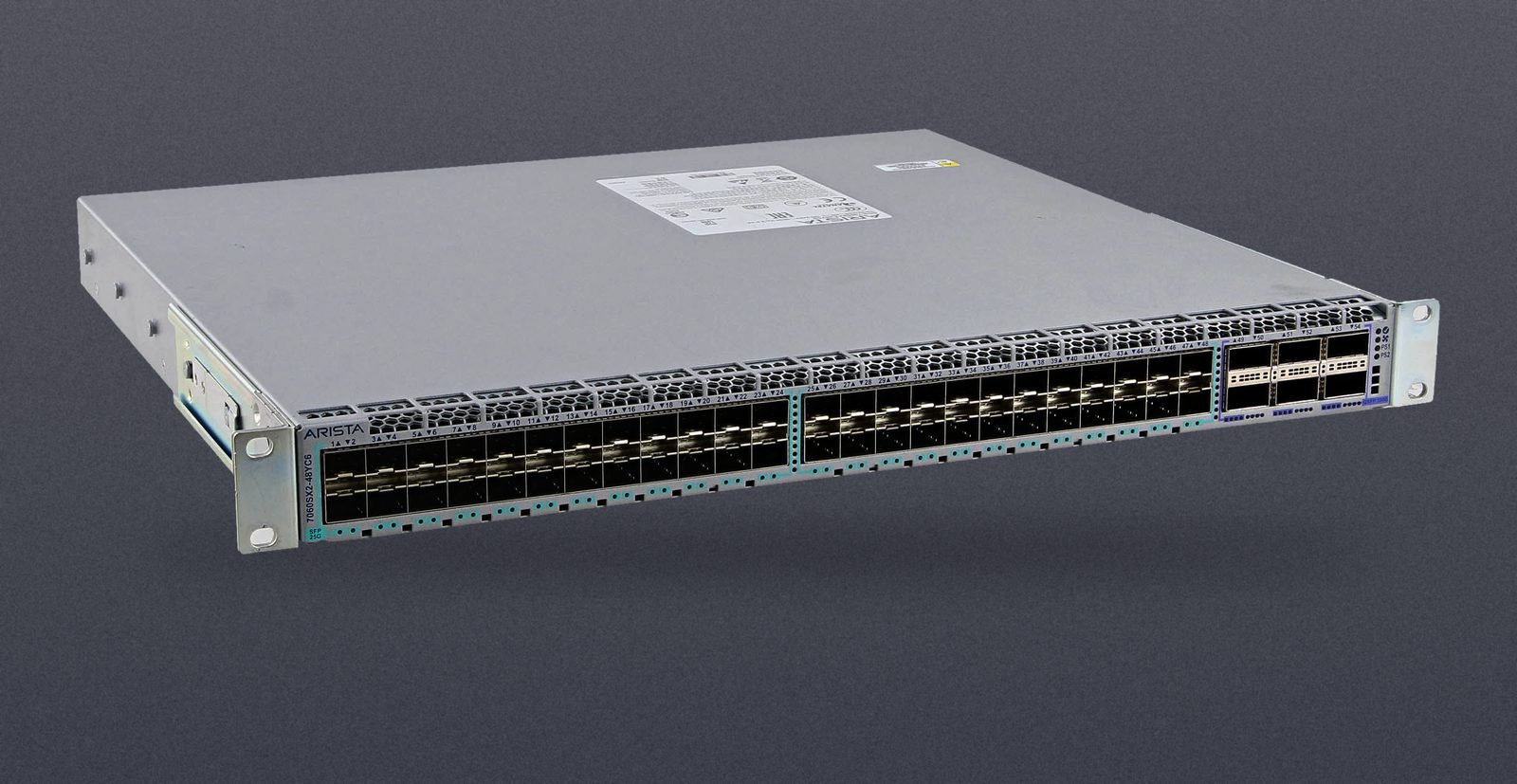
| DCS-7050SX2-72Q | 7050X2 | 48 x 10GbE SFP+, 6 x 40GbE QSFP+ | Not stated | Not stated |
| DCS-7050SX3-48YC8 | 7050X3 | 48 x 25GbE SFP, 8 x 100GbE QSFP100 | 2 (4) Tbps, 1 Bpps | 800 ns |
| DCS-7050QX-32S | 7050X | 32 x 40GbE QSFP+, 4 x SFP+ | 2.56 Tbps | Not stated |
| DCS-7050QX2-32S | 7050X2 | 32 x 40GbE QSFP+, 4 x SFP+ | 2.56 Tbps, 1440 Mpps | 550 ns |
| DCS-7050TX-64 | 7050X | 48 x RJ45 1/10GBASE-T, 4 x QSFP+ | 1.28 Tbps | Not stated |
| DCS-7050TX3-48C8 | 7050X3 | Copper 10GBASE-T | 1.28 (2.56) Tbps, 1 Bpps | 3 microseconds |
7050SX: SFP+ fiber ports
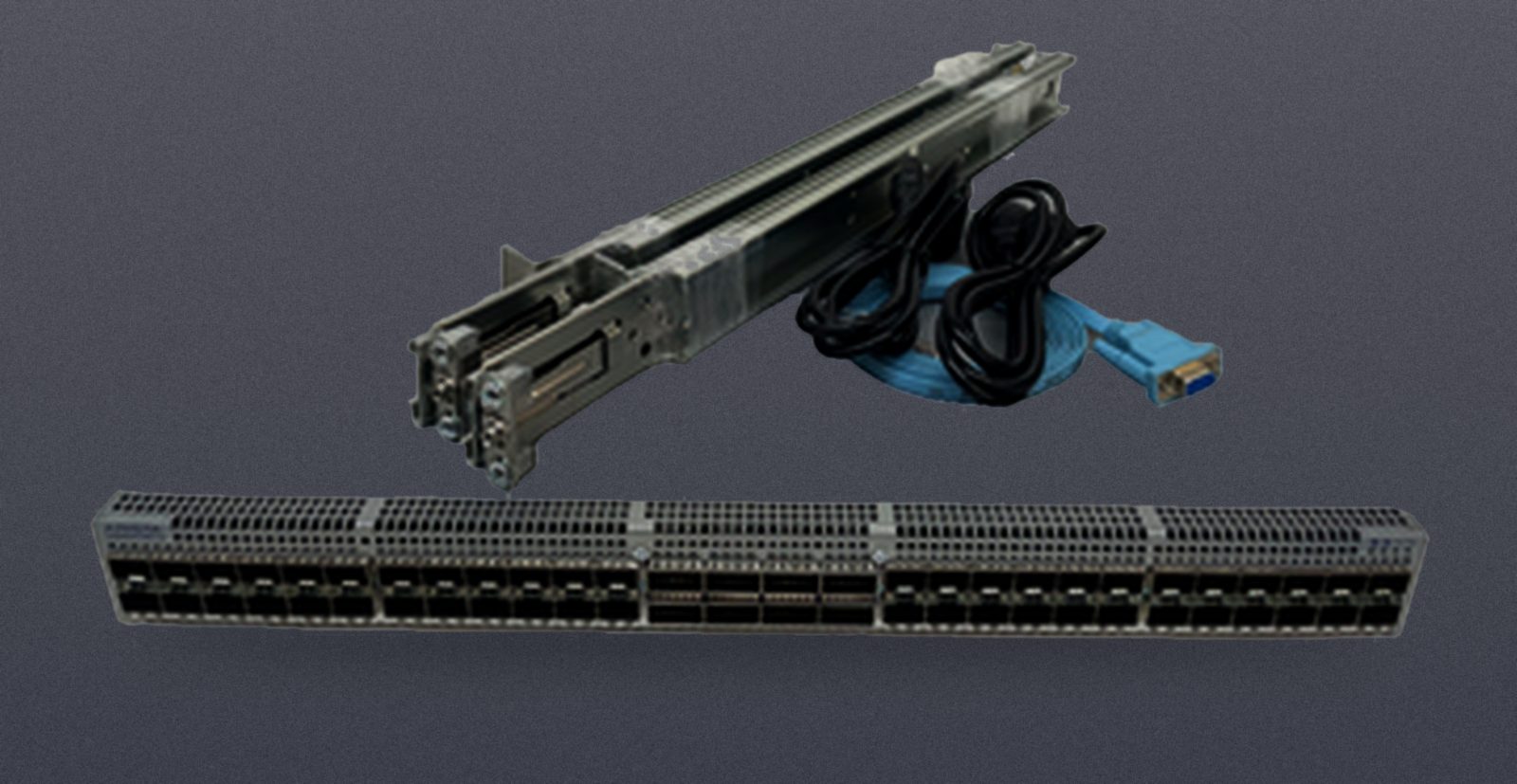
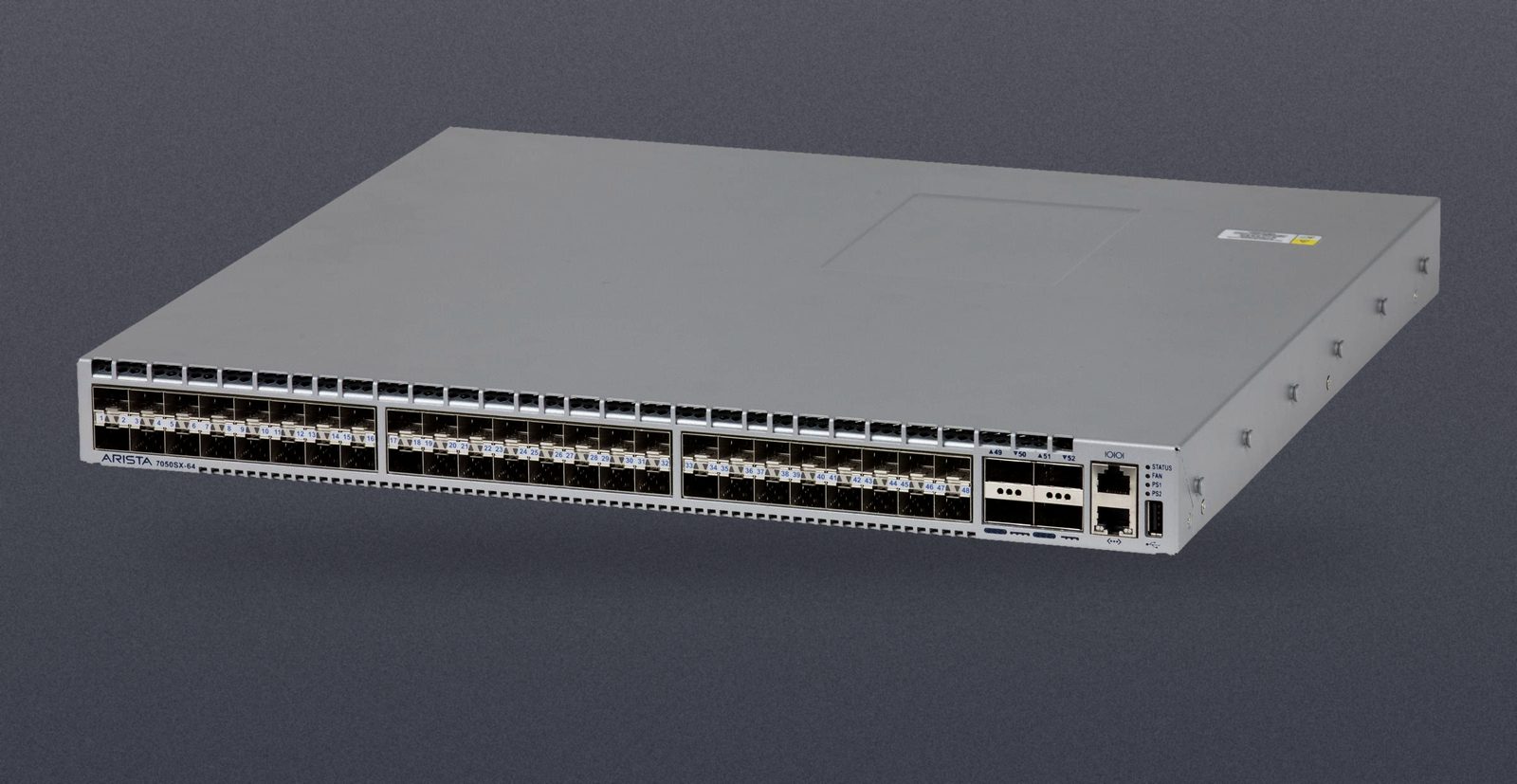
The DCS-7050SX-64 is the original 7050X: 48 SFP+ ports and 4 QSFP+ ports, 1.28 Tbps, 960 Mpps and 550 ns of latency. It has 4 GB of memory, 2 hot-swap power supplies (1+1), 4 hot-swap fans (N+1), draws 140 W typical and 220 W at most, and weighs 19 lb (8.6 kg). The DCS-7050SX2-72Q is the 7050X2 version with 48 10GbE SFP+ ports and 6 40GbE QSFP+ ports, shipped with 2 PWR-500AC supplies (1+1) and 2 C13-C14 cords. The DCS-7050SX3-48YC8 is the 7050X3: 48 25GbE SFP ports, 8 100GbE QSFP100 ports, 2 (4) Tbps, 1 Bpps, 800 ns and a 32 MB buffer with dynamic allocation, drawing 124 W typical and 301 W at most. Its 10GbE sibling, the DCS-7050SX3-48C8, gives 1.28 (2.56) Tbps and draws 106 W typical and 285 W at most.
7050QX: 40GbE QSFP+ ports
The DCS-7050QX-32S and the DCS-7050QX2-32S share a face: 32 40GbE QSFP+ ports and 4 SFP+ ports, the SFP+ ports shared with the first QSFP+ port, and 2.56 Tbps. Arista says 24 of the QSFP+ ports can run as 4x10GbE. What changes with the generation is inside: the 7050X model has 4 GB of memory and a 12 MB buffer, the 7050X2 model 8 GB and 16 MB. The DCS-7050QX2-32S gives 1440 Mpps and 550 ns, runs on 2 500 W AC supplies (1+1), draws 129 W typical and 283 W at most, and weighs 20 lb (9.1 kg) in 1RU.
7050TX: copper 10GBASE-T
The DCS-7050TX-64 is the copper 7050X: 48 RJ45 ports that run 1/10GBASE-T and 4 QSFP+ ports, with 1.28 Tbps, 1+1 redundant power and N+1 fans. Copper costs power: Arista rates the 7050TX Series at typical power under 5W per 10GbE port, against under 2W on the SFP+ 7050SX. The 7050X3 copper model, the DCS-7050TX3-48C8, gives 1.28 (2.56) Tbps, 1 Bpps, 3 microseconds of latency and a 32 MB buffer in 1RU, and draws 212 W typical and 346 W at most.
What to check before you buy
- The letters after 7050: SX for SFP+, QX for QSFP+, TX for 10GBASE-T copper.
- The digit after the X: none for the 7050X, 2 for the 7050X2, 3 for the 7050X3.
- The last letter: F moves air front to rear, R rear to front, and every switch in a rack row should match.
- The memory and buffer when two models share ports: the DCS-7050QX2-32S doubles the memory of the DCS-7050QX-32S.
- The power budget on copper: a 7050TX draws more per port than a 7050SX.
Lifecycle: what the dates mean
Arista's data sheet marks the DCS-7050QX2-32S as subject to an end of sale notice. For the 7050X3, Arista's notice gives 31 December 2026 as the planned last day to order the DCS-7050SX3-48YC8 and DCS-7050SX3-48C8, and 31 December 2031 as the last day for support and hardware replacement; it names the DCS-7050SX3-48YC8C, with 16 GB of memory and 32 GB of flash, as the model that follows.
Where to look
Each family has its own page listing what is in stock: the 7050SX, 7050QX and 7050TX, with the 7050X generation and the whole Arista 7050 line. Pages in stock today include the DCS-7050SX-64-F, the DCS-7050QX-32S-F, the DCS-7050TX-64-F and the DCS-7050QX2-32S-R. For the 7050X3 against the 7280R3, read Arista 7050X3 and 7280R3 families explained; for the whole maker, the Arista guide. Request a quote for a part that is not listed, or sell the switches you retire.